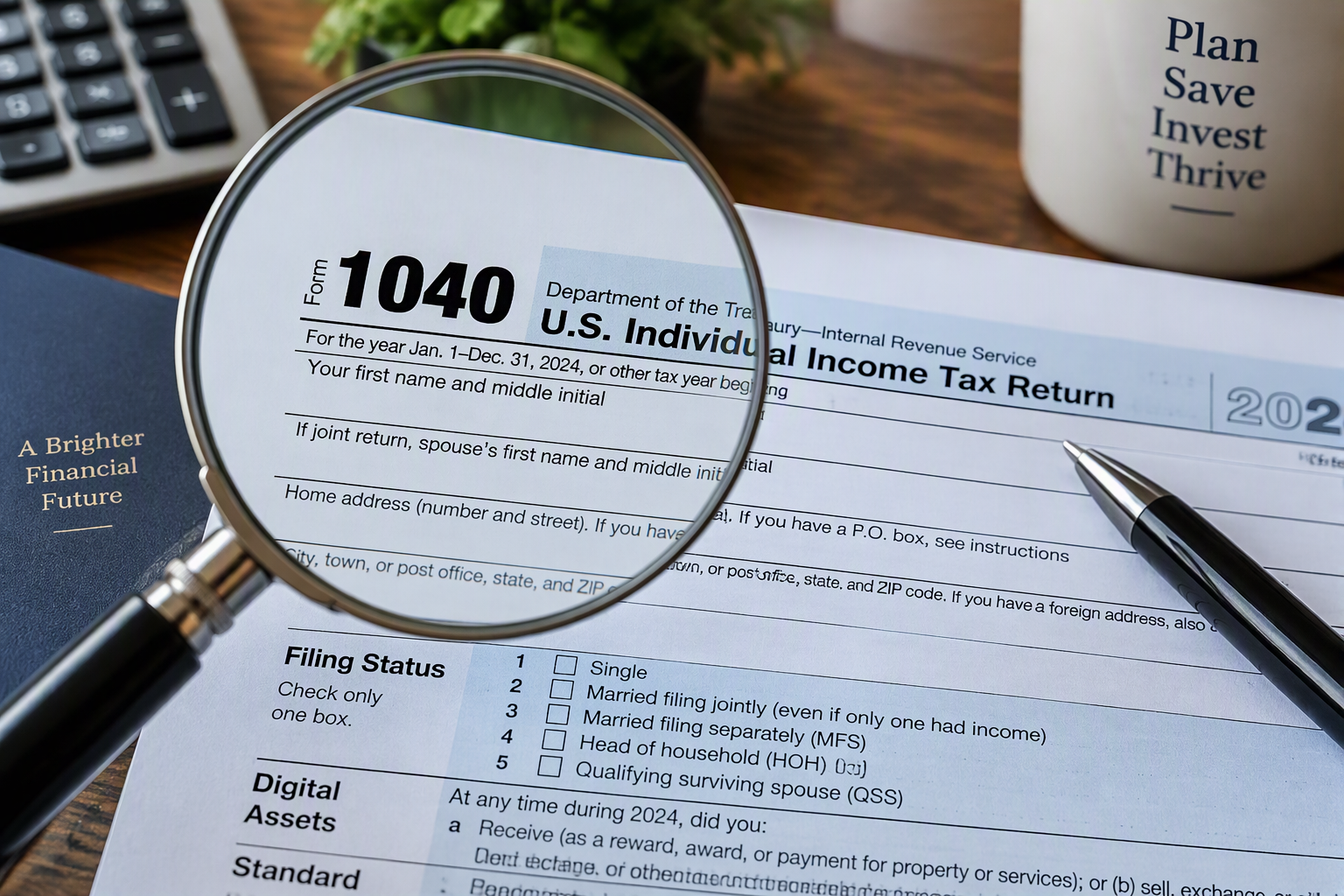
As we head into the final few months of the year, most people are focused on the upcoming holidays, family plans, and finishing projects before December. Unfortunately, tax planning often gets pushed to the bottom of the list.
That’s a mistake.
Many of the best tax planning opportunities disappear on December 31. By the time you’re sitting down with your CPA next spring, there is often little that can be done to reduce the taxes owed for the prior year.
The good news is that there is still time to take action.
Whether you’re retired, approaching retirement, or simply looking to keep more of what you’ve earned, here are some of the most overlooked year-end tax planning opportunities worth reviewing before the calendar turns to January.
1. Consider a Roth Conversion Before Tax Rates Change
One of the most valuable tax planning strategies available to retirees is a Roth conversion.
A Roth conversion allows you to move money from a traditional IRA to a Roth IRA. You’ll pay taxes on the amount converted today, but future growth and withdrawals can potentially be tax-free.
A Roth conversion may make sense if:
- You recently retired and your income is temporarily lower
- You expect to be in a higher tax bracket later
- You want to reduce future Required Minimum Distributions (RMDs)
- You plan to leave assets to children or grandchildren
In many cases, the goal isn’t to convert an entire IRA. Instead, it may make sense to systematically convert smaller amounts over multiple years.
2. Review Your Required Minimum Distributions (RMDs)
Every year, I speak with retirees who intend to take their RMD later in the year and then forget about it until December.
Waiting until the last minute can create unnecessary stress and potentially costly mistakes.
Now is a good time to:
- Confirm you’ve taken all required distributions
- Review tax withholding elections
- Coordinate distributions across multiple accounts
- Evaluate whether additional distributions are needed for spending needs
A quick review today can help avoid scrambling at year-end.
3. Use Qualified Charitable Distributions (QCDs) If You Donate to Charity
If you’re over age 70½ and charitably inclined, a Qualified Charitable Distribution could be one of the most tax-efficient ways to give.
Instead of writing a check from your bank account, you can make a distribution directly from your IRA to a qualified charity.
Benefits may include:
- Satisfying part or all of your RMD
- Reducing taxable income
- Lowering adjusted gross income (AGI)
- Potentially reducing Medicare premium surcharges
Many retirees who donate regularly are surprised to learn how powerful this strategy can be.
4. Don’t Overlook Capital Gain and Loss Planning
Most investors have heard of tax-loss harvesting. Fewer realize that capital gains deserve just as much attention.
Before year-end, it may make sense to:
- Sell investments with losses to offset gains
- Reduce concentrated stock positions
- Rebalance portfolios strategically
- Take advantage of lower capital gains tax rates when available
The right strategy depends on your overall tax situation and future plans, which is why tax planning should never happen in a vacuum.
5. Check Your Tax Withholding Before It’s Too Late
One of the most common surprises I see is retirees discovering they didn’t have enough taxes withheld during the year.
The shortfall often comes from:
- IRA distributions
- Pension payments
- Social Security benefits
- Investment income
- Unexpected one-time income events
A simple tax projection before year-end can help identify potential issues while there is still time to make adjustments.
Nobody enjoys writing an unexpected check to the IRS in April.
6. Watch Out for Medicare IRMAA Surcharges
Many retirees focus on income taxes and completely overlook Medicare premiums.
Medicare uses a surcharge system known as IRMAA (Income-Related Monthly Adjustment Amount). Higher income can result in significantly higher Part B and Part D premiums.
Common triggers include:
- Large Roth conversions
- Capital gains
- Significant IRA withdrawals
- Sale of appreciated assets
This doesn’t mean you should avoid these planning strategies. It simply means the potential IRMAA impact should be part of the conversation before making major decisions.
7. Review Beneficiaries and Estate Planning Documents
While not traditionally viewed as a tax strategy, beneficiary designations and estate planning documents play a major role in preserving wealth for future generations.
Year-end is an excellent time to review:
- IRA beneficiaries
- Roth IRA beneficiaries
- Trust funding
- Powers of attorney
- Health care directives
- Estate planning documents after major life changes
A five-minute review can prevent significant headaches later.
The Bottom Line
The best tax planning opportunities don’t happen during tax season. They happen before the year ends.
For many retirees and successful families, proactive planning can lead to lower lifetime taxes, greater retirement flexibility, and a more efficient transfer of wealth to the next generation.
If you haven’t reviewed your tax situation recently, now is the time. The sooner these conversations happen, the more options are typically available.
After all, good tax planning isn’t about finding deductions in April. It’s about making smart decisions throughout the year that put you in a better position long term.