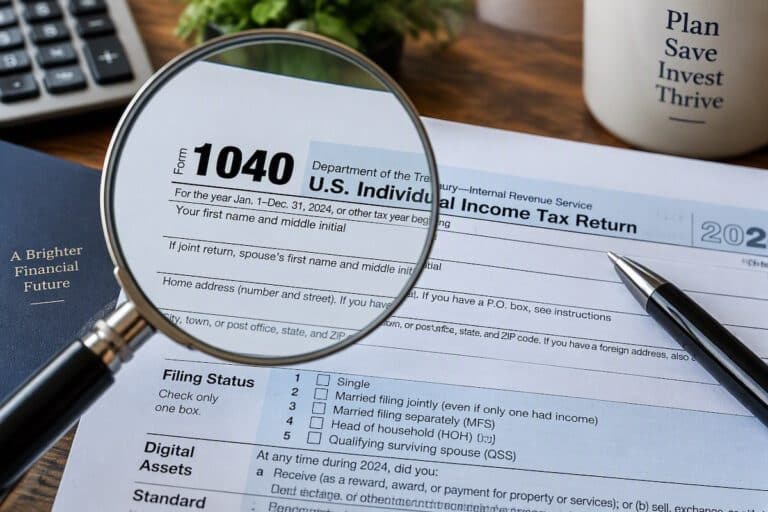
No one wants a surprise tax bill in April. But that is exactly what can happen when retirement income, tax withholding, RMDs, charitable giving, and cash reserves are not reviewed until the end of the year. This time of year is a great time to make adjustments. There is still enough time to fix withholding, plan distributions, set aside cash, and avoid rushed decisions in December.
Here are five questions to ask now.
1. Are you withholding enough for taxes?
Retirement income can be taxable, but taxes are not always withheld automatically.
This can apply to:
- Social Security
- Pension income
- IRA or 401(k) distributions
- Interest and dividends
- Capital gains
- Rental income
If not enough tax is paid during the year, you could end up with an unexpected tax bill when you file your return. In some cases, there may also be an underpayment penalty. This is especially important if you have income where taxes are not withheld, such as interest, dividends, capital gains, rental income, or business income. If that applies to you, ask your accountant whether quarterly estimated tax payments are needed.
2. Do you have a plan for your RMD?
If you are required to take minimum distributions from retirement accounts, do not wait until December.
Your RMD should be coordinated with:
- Your spending needs
- Your tax withholding
- Your investment allocation
- Your charitable giving plans
The goal is to make your RMD part of your overall income plan, not a last-minute transaction. If you don’t need this distribution for income, there should be a plan to reinvest or donate some or all of this distribution.
3. Should you set aside your RMD amount now?
If you plan to take your RMD later in the year, consider moving the expected amount into a more conservative, interest-bearing investment. This can help you avoid selling stocks during a weak market just because a deadline is approaching. It also gives you more certainty around cash flow.
4. Should charitable gifts come from your IRA?
If your RMD is more than you need for living expenses, a qualified charitable distribution may be worth considering.
A QCD allows eligible IRA owners to donate directly from an IRA to charity. For retirees who already give to charity, this can be a tax-efficient way to satisfy part of an RMD while supporting causes they care about.
The key is that the money must go directly from the IRA to the charity.
5. Are your cash reserves still appropriate?
Cash is important in retirement, but the right amount can change. Too little cash can create stress if markets decline or large expenses come up. Too much cash can drag on your long-term plan, especially if it is sitting idle.
Midyear is a good time to ask:
- Do I have enough cash for upcoming expenses?
- Have I set aside money for taxes?
- Am I holding extra cash for a specific reason?
- Could some of it be earning more interest?
Bottom line
Retirement income planning is not just about how much you withdraw. It is about coordinating income, taxes, investments, charitable giving, and cash reserves.
Midyear is the right time to review the plan while there is still time to make adjustments. A few small moves now can make year-end a lot smoother.
Content in this material is for general information only and not intended to provide specific advice or recommendations for any individual.